
The HORN Institute brings together a unique team of experts from across the world. The experts come from diverse backgrounds, including academia and practice and possess broad knowledge and a wide range of skills on security and defense, diplomacy and foreign policy, conflict resolution and peace-building, political governance, transnational crimes, communication, radicalization and violent extremism, among others.
Daniel Iberi
Senior Fellow, Regional Democracy, Governance and Rule of Law Program
Brig Gen (Rtd) Ahamed Mohammed, E.B.S.
Associate Fellow Defence and Security
Prof. Macharia Munene, Ph.D.
Associate Fellow, Diplomacy, Geopolitics, and Foreign Relations
Fatuma Ahmed Ali, Ph.D.
Associate Fellow, International Relations, Conflict and P/CVE
Prof. Fred Jonyo, Ph.D.
Senior Fellow, Regional Democracy, Governance and Rule of Law Program
Prof. Aleksi Ylönen, Ph.D.
Associate Fellow, Politics and International Affairs, Horn of Africa Specialist
Ali M. Hadi, Ph.D.
Associate Fellow, Maritime Law
Suad Mustafa Elhag Musa, Ph.D.
Senior Fellow, Regional Democracy, Governance and Rule of Law Program
Dr. Shazia Chaudhry, Ph.D.
Associate Fellow, Climate Change and Adaptation
Winnie Rugutt
Associate Fellow, Diplomacy, Geopolitics, and Foreign Relations
Mariah Faridah Muli
Associate Fellow Global Security, Conflict Resolution, Diplomacy, International Law and Gender Justice
Prof. Mesenbet Assefa
Senior Fellow, Regional Democracy, Governance and Rule of Law Program
Laurence Jost
Associate Fellow, Defence and Security
Mathieu Gotteland PhD.
Fellow, Horn of Africa Regional Peace and Security Program
Partha Moman
Fellow, Horn of Africa Regional Peace and Security Program
Zohra Mohamed Omar, PhD.
Fellow, Horn of Africa Regional Peace and Security ProgramHARPS
Solomon Kimaita
Fellow, Horn of Africa Regional Peace and Security Program (HARPS)

Daniel Iberi
Academic Qualifications
- Master of Arts in Communication Studies from the University of Nairobi, Kenya
- Bachelor of Education (Arts) from Kenyatta University, Kenya.
- Trainer in Communication for Development
Areas of Specialization
- Information Gathering, Analysis and Report Writing
- Advanced Editing and Writing
- Online Journalism and Social Media Communication
- Development Communication
- Facilitation and Training
Professional Membership
- Public Relations Society of Kenya
- Kenya Union of Journalists (KUJ)
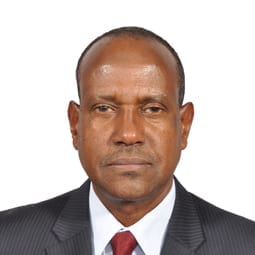
Brig Gen (Rtd) Ahamed Mohammed, E.B.S.
Academic Qualifications
- Master of Arts in Defence Studies from Kings College, University of London
- Master of Arts in International Studies from the University of Nairobi
Areas of Specialization
- Defence and Security
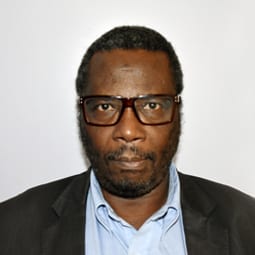
Prof. Macharia Munene, Ph.D.
Overview
Professor Macharia Munene holds a Doctor of Philosophy in Diplomatic History from Ohio University (USA). He is a Lecturer at the United States International University in Nairobi (Kenya) where he teaches History and International Relations. He has also taught at the University of Nairobi (Kenya), Kenyatta University (Kenya), Moi University (Kenya), The Ohio State University (USA), Kentucky State University (USA), and Ohio University (USA). He has served as Collaborating International Faculty, Universitat Jaume-1, Castellon (Spain) and he is Professorial Affiliate of the National Defence College (Kenya).
Prof. Munene is recognized as a United Nations Expert on Decolonization, and he is rated among the Top 100 CCTV-4 commentators in the world. He is a newspaper columnist and his publications include books, edited books, book chapters, scholarly journal articles, as well as articles in popular magazines, and newspapers.
Prof. Munene is the author of Kenya: Political Testament of Nationhood (Nairobi: Fig Tree Books, History Works, 2017); Historical Reflections on Kenya: Intellectual Adventurism, Politics, and International Relations (Nairobi: University of Nairobi Press, March 2012); Politics of Transition in Kenya, 1995-1998. (Nairobi: Quest and Insight, 2001); and The Truman Administration and the Decolonization of Sub-Saharan Africa (Nairobi: Nairobi University Press, 1995).
Other books include Understanding Conflict and Its Management: Some Kenyan Perspectives (Nairobi: Centre for Conflict Research and Women and Law, 1998) with Makumi Mwagiru and Njeri Karuru; History of South Africa (Nairobi: College of Education and External Studies, University of Nairobi, 1992) with Justus B. Mugaju; and History of the United States up to the Reconstruction (Nairobi: College of Education and External Studies, University of Nairobi, 1990).
His research interests include history and international relations.
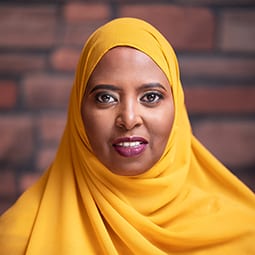
Fatuma Ahmed Ali, Ph.D.
Overview
Fatuma Ahmed Ali holds a European Doctorate with Distinction from the Universitat Jaume I, Castellón (Spain); an International Master in Peace, Conflict and Development Studies (Honors) from UNESCO Chair for Philosophy of Peace, POP-Official Postgraduate Program (Spain); Master of Philosophy (MPhil) (Honors) in “Peace, Conflict and Democracy” from Universitat Jaume I, Castellón (Spain); an International Master in Peace and Development Studies, from the MA Program of Peace and Development Studies of the Universitat Jaume I, Castellón, Spain; and Bachelor of Arts in International Relations (Honors) with Minors in Sociology and Management from United States International University – Nairobi (Kenya).
Dr. Fatuma Ali is an Associate Professor of International Relations at the United States International University – Africa (USIU-A), Nairobi (Kenya). She is also a Visiting Faculty and an External researcher of the Interuniversity Institute for Social Development & Peace (IUDESP) of the Universitat Jaume I, Castellón, Spain.
Her areas of specialization lie in the field of International Relations, Peace, Conflict and Development Studies, Gender, Security, Preventing and Countering Violent Extremism (PCVE), Foreign Policy and Politics in the Horn of Africa. Her research interest includes Gender and Violent Extremism, Women and War, Peace Education, Peace Culture, Indigenous Conflict Transformation and Peacebuilding Models, Social Development, Feminist Theory, African-Islamic Feminism, Women´s agency, Elections, Peace Settlements, Informal institutions/actors and Migration/Displacements in the Horn of Africa, Gender/Child Protection of Refugees, Violence against Women (VAW), Gender Based Violence and Conflict Related Sexual Violence (CRSV).
Dr. Fatuma Ali is also a researcher, trainer, curriculum developer/reviewer, peer reviewer, external examiner, African-Islamic feminist, Pan-Africanist, mentor and academic activist. She has also worked as an independent consultant with International NGOs, UN agencies (UNDP, UNHCR, and UNODC), Kenyan Government, and the Commission for University Education (CUE). She has organized/co-organized several seminar series, roundtables, colloquium, and international conferences.
Recently, she was awarded the UK Research Innovation (UKRI) GCRF grant to carry out a collaborative project with Dr. Sahla Aroussi from Leeds University and Ms. Pauline Skaper from Rift Valley Institute, to develop an open, critical and interdisciplinary global network on Gender and Responding to Violent Extremism (GARVE) https://garve-network.org. She is also a recipient of the prestigious Peace Prize 2020 award of the City of Castellon (Premio Por la Paz Ciudad de Castellon), Spain for her activism against violence against women and women empowerment. She has published numerous peer-reviewed articles, book chapters, briefs, opinion pieces, one edited and self-authored book in both English and Spanish languages.
She is also a Board member of the NGOs Coalition of Violence Against Women (COVAW), Conscious Kenya, and the Nairobi Patron of the Community-based Organisation Sisters with a Mission.
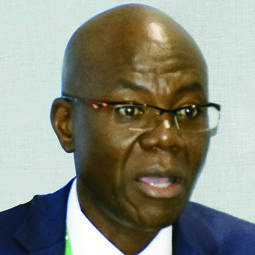
Prof. Fred Jonyo, Ph.D.
Overview
Prof. Fred Jonyo is the current Chairman, Department of Political Science and Public Administration, University of Nairobi. He holds a Doctor of Philosophy in Political Science and Public Administration from Makerere University, Uganda; a Master’s Degree in International Relations from The Graduate School of International Relations (GSIR), International University of Japan (IUJ) Niigata, Japan; and a Bachelor’s Degree in Anthropology and Political Science from The University of Nairobi, Kenya.
He specializes in Political Economy, International Relations, Trade and Investment Policy, Security Studies. He has served under Government Appointment as a Council Member, Kenya School of Government (2015–2018). Chair, Audit and Risk Management sub – Committee of Council of Kenya School of Government.
He is an External Examiner for Maseno University, Multimedia University and University of Botswana. He has consulted for National Assembly; Center for Parliamentary Studies and Training (CPST); National Counter Terrorism Center (NCTC); Defense Staff College (DSC); National Defense College (NDC); National Intelligence College (NIC); Konrad-Adenauer Stiftung, Kenya Office; Friedrich Ebert Stiftung, Kenya Office; UNDP; EU among others.
He has published extensively in journals, contributed in book Chapters, co-Authored Books and Authored Books on topical academic issues.

Prof. Aleksi Ylönen, Ph.D.
Overview
Prof. Aleksi Ylönen holds a Doctorate in International Relations and African Studies (Summa cum Laude) from the Autonomous University of Madrid (Universidad Autónoma de Madrid), Spain; an International Master in Peace, Conflict, and Development Studies from UNESCO Chair of Philosophy for Peace, Jaume I University (Universitat Jaume I), Castellón (Spain); and Bachelor of Arts in History with Minor in Economics (Highly Distinguished) from the College of Charleston (USA).
He has conducted research and taught Politics and International Relations extensively in Europe and Africa. Prof. Aleksi Ylönen has collaborated with various higher education and research institutions, including University Institute of Lisbon (Portugal), Jaume I University (Spain), European University of Valencia (Spain), University of Valencia (Spain), University of Hargeisa, United States International University – Africa (Kenya), Marmara University (Turkey), University of Turku (Finland), Peace Research Institute Frankfurt (Germany), University of Frankfurt (Germany), University of Bayreuth (Germany), and the School of Oriental and African Studies (the UK).
Prof. Aleksi Ylönen specializes in Politics and International Affairs in the greater Horn of Africa. His work has been published in various scholarly and non-academic outlets. Among Prof. Ylönen’s salient publications are The Horn of Africa since the 1960s (Abingdon: Routledge, 2017), edited with Dr. Jan Záhořík; On state, marginalization, and origins of rebellion (Trenton: Africa World Press, 2016); and various scholarly articles in respected Politics and International Relations, Political History, and Area Studies journals. Prof. Aleksi Ylönen engages in frequent expert commentary for research institutions and conventional and online media.
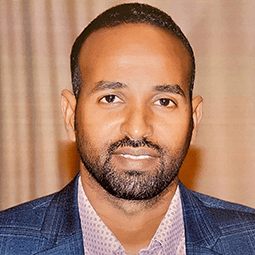
Ali M. Hadi, Ph.D.
Dr. Ali is a Senior Lecturer in Maritime Law at the University of Djibouti. He is also a researcher at the Department of Transport and Logistics at the University Technological Institute (IUT) and associate researcher at the University of Nantes at the Center for Maritime and Oceanic Law (CDMO), France. He holds a doctoral degree in Public Law, specializing in port law from the University of Nantes (France), and a Masters in Maritime Affairs Management from the Institute of Administration and Business (IAE), France. His research interests are in the areas of maritime crime, intra-regional migration in its legal aspect, violent extremism, the establishment of a legal and legal framework for ports. He has directed research theses on issues relating to labor migration, the management of the impact of migration on the Djiboutian marine environment, maritime piracy in the Gulf of Aden, and violent extremism in the IGAD region.

Suad Mustafa Elhag Musa, Ph.D.
Suad Mustafa Elhag Musa is the author of the 2019 Aidoo-Snyder Award-winning book: “Hawks and Doves in Armed Conflict in Sudan. Al-Hakkamat Baggara Women of Darfur,” published by James Curry. She holds a Doctor of Philosophy in Peace Studies from Bradford University (UK) focusing on women’s agency in conflict and peace and a Master of Arts in Rural Development from the University of East Anglia (UK). She has also earned Postgraduate Diplomas in Development Studies and in Social Research Methods from East Anglia and Bradford Universities (UK), respectively, and Bachelor of Science from Khartoum University. She is a co-founder and Director of the Gender Centre for Peacebuilding and Sustainable Development in El Fasher, Darfur, Sudan.
She has taught at Qatar University and Royal University of Women in Bahrain universities as assistant professor teaching several courses including sustainable development, human rights, sociology, and qualitative research. Her other thematic areas of specialization and interest include women’s political participation in democratic governance, gender issues in peacebuilding, peace negotiations, local reconciliation mechanisms and post-conflict democratic transition. She is also deeply involved in issues sexual violence and gender-based violence (SGBV), internal displacement and migration of women in the Horn of Africa. Additionally, she focuses on enhancing the leadership, innovation, aspirations, and sustainable livelihood resiliency of pastoralists, young people and civil society organizations.
Dr. Suad is a researcher who has collaborated with multiple international organizations including the United Nation Environment Program (UNEP). She has been a development practitioner in the humanitarian and development sector, working with international and national non-governmental and civil society organizations (INGOs, NGOs & CSOs). Her background includes substantial and varied experience working in humanitarian aid and integrated development in the Horn of Africa and beyond focusing on the analysis of food security situation, capacity building, strategic planning and policy and project development and evaluation. As an activist in the field of women’s and child’s rights, gender equality, violence against women and gender-based violence, and women’s security and protection, Dr. Suad has convened numerous seminars and workshops, and facilitated and led discussion groups and dialogues on peacebuilding, reconciliation, and political transformation. She is an active member in several academic and non- academic associations, such as African Feminist Initiative – USA (AFI-USA), Women Caucus- USA, and Society for the Study of Sudan and South Sudan -UK (SSSUK).
Dr. Suad’s research interests encompass women and political authority in the Horn of Africa and West Africa; gender issues in conflict and in indigenous and modern negotiation mechanisms and justice; gender analysis of conflict and internal displacement; women and youth in peacebuilding and post-conflict democratic transition; climate change and sustainable development; African women, culture, religion, and social change across intersectional identities, among many other topics. Her work has been published in various academic and non-academic outlets, including articles in Arabic in e-magazines. Earlier this year (2024), she published a novel in Arabic titled: laana fi jawof al-waadi (a curse in the belly of a valley).
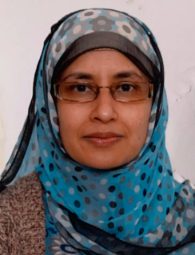
Dr. Shazia Chaudhry, Ph.D.
Dr. Shazia Chaudhry is a Senior Lecturer at the Department of Diplomacy and International Studies (DDIS), Faculty of Arts and Social Sciences, University of Nairobi, Kenya. She is also an associate at the Institute for Climate Change and Adaptation at the same institution.
Dr. Chaudhry earned her Bachelor of Science in Mathematics and Physics from the University of the Punjab, Pakistan, and later obtained both her MA and Ph.D. in International Studies from the University of Nairobi. Her doctoral research delved into the impacts of climate change, specifically examining anthropogenic factors and their effects on human security in Africa, with a particular focus on the Mau Forest Complex (1963-2012).
Her research interests are broad, encompassing climate change governance, global security issues, environmental conflicts, and environmental diplomacy. Dr. Chaudhry has contributed significantly to the field through numerous book chapters, articles, and research papers, often addressing the implications of human-induced climate change on vulnerable communities reliant on their environment.
Beyond her academic achievements, Dr. Chaudhry is deeply committed to improving the welfare of underprivileged and vulnerable members of society, reflecting her dedication to both scholarly inquiry and social impact.

Winnie Rugutt
Winnie Rugutt is a lecturer at the Department of Diplomacy and International Studies (DDIS) at the University of Nairobi, Kenya. Her academic focus is on the International Relations of African States. In addition to her teaching role, she leads the Africa Center for the Study of the United States (ACSUS) at the University of Nairobi, providing strategic direction and overseeing its daily operations. ACSUS-Nairobi is dedicated to fostering intellectual and cultural exchanges that enhance the understanding of Africa-U.S. relations. Previously, she served as the Academic Program Coordinator at the National Defense College and Defense Staff College in Kenya.

Mariah Faridah Muli
Mariah Faridah Muli is a researcher and policy associate at The HORN International Institute for Strategic Studies, Ms. Muli has contributed significantly to policy analysis, strategic research, and publications on key geopolitical issues such as global peace and security, conflict resolution, women advocacy and diplomacy. She has authored numerous publications, including policy briefs reports and peer-reviewed articles and regularly represents the institute at international conferences and high-level discussions on the Horn of Africa and broader global security dynamics.
She is also a Doctoral Student and Adjunct Lecturer at the University of Nairobi’s, Department of Diplomacy and International Studies. She holds a Master’s degree in Diplomacy and International Relations from University of Nairobi. With over 8 years of experience in international relations, security policy, and governance, she specializes in global security, conflict resolution, diplomacy, international law and gender justice. Ms. Muli is committed to advancing research that fosters security, peacebuilding, governance, diplomacy, women advocacy and sustainable development.
Her work is deeply committed to advancing research that promotes peacebuilding, security, governance and sustainable development. She seeks to bridge the gap between academia and policy, making invaluable contributions to the fields of diplomacy, international relations, and women’s empowerment. Through her research and advocacy, Ms. Muli strives to foster a more just and peaceful global community.
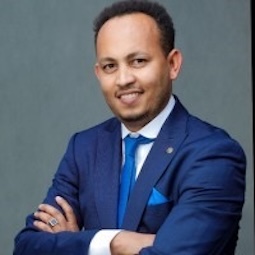
Prof. Mesenbet Assefa
Prof. Mansenbet has extensive experience in international law, security and conflict studies comparative constitutional law, African Union Law, criminal law, business law, human rights and the Geopolitics of the Horn. Mesenbet has published numerous international and local journals. He has presented his research findings in leading centers of excellence including Yale School of Law, London School of Economics, University of Pretoria and University of Seville. His particular research interests include development, Security/counter terrorism, violent extremism, human rights, constitutional law and freedom of expression. Mesenbet has served in numerous positions including as Head of the School of Law Addis Ababa University, Associate Dean for Graduate Studies of Addis Ababa University School of Law and Director of Mekelle University Human Rights Centre. Mesenbet has also extensive experience in consulting governmental, inter-governmental and non-governmental organizations at various levels. Currently, he also serves as a committee member in the National Legal Reform Council of Ethiopia.
Area of Expertise
Security and Conflict Studies
International laws
Counter terrorism and violent extremism

Laurence Jost
Academic Qualifications
- B.A. Sociology & Political Science / Reserve NCO
Area Specilization
- Defence and Security
- Member of the German academic association for security studies (BSH)

Mathieu Gotteland PhD.
“Dr Mathieu Gotteland holds a PhD in History of international
relations (University Paris I Panthéon-Sorbonne, France). A former
Jean Walter-Zellidja fellow (Académie française) and a former PhD
fellow of the French Ministry for Defence, he has been awarded by the
latter a Prize in Military History (2014).
Currently an independent researcher in (history of) international relations, he has published a number of academic articles and book chapters. A participant to several think tanks and international research groups, his research interests include informal imperialism, terrorism, hybrid and secret warfare, and the dynamics of international and non-international conflict, particularly in Africa.
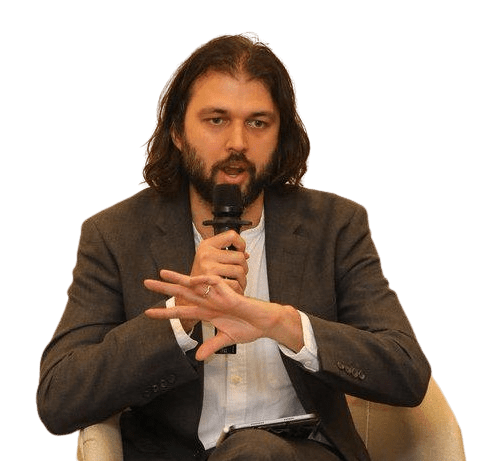
Partha Moman
Partha is an independent researcher focused on supporting peace efforts in Somalia and the wider Horn of Africa. To this end, he has provided research and advisory services for the UN, the World Bank, SIDA, and other institutional donors. He is pursuing a PhD in International Relations at LSE, exploring the impact of changing geopolitics on security dynamics in the Horn.
He previously designed and led the Somali Dialogue Platform at the Rift Valley Institute. Earlier in his career he worked for Africa’s Voices Foundation, Chatham House, and the Centre of Governance and Human Rights at the University of Cambridge. He is a fellow of Somali Public Agenda in Mogadishu and the Institute for Peace and Security Studies in Addis Ababa.

Zohra Mohamed Omar, PhD.
Bio to follow

Solomon Kimaita
Solomon Kimaita is an accomplished Lecturer of International Relations and Diplomacy at Zetech University in Nairobi, Kenya, specializing in Peace and Conflict Studies. He holds an M.A. in International Relations from the United States International University-Africa, and a B.A. in Social Studies – Government and Public Administration from Moi University in Eldoret, Kenya. Solomon’s teaching portfolio covers topics such as Development Dynamics in Africa, Regional Integration and International Conflict Management. He is a Certified Professional Mediator and has certifications in pedagogy and academic quality assurance.
His experience spans significant roles in humanitarian work with UNHCR and project management with USIU’s Development Partnerships in Higher Education Project. He has contributed to multiple academic conferences and published in peer-reviewed journals on emerging themes like AI in conflict prevention, youth participation in climate resilience and digital diplomacy. A committed academic, Solomon actively contributes to curriculum development and mentorship as the patron of the UNESCO Club at Zetech. His professional affiliations include membership in the Christian Professional Mediators Association of Kenya (CPMAK) and the International Relations Society of Kenya (IRSK).