
The Council of Advisors of the HORN Institute brings together respectable people with a wealth of experience and provides the structure that advises, validates and supports the growth of the Institute.
The Evolution of Australian Online Gambling Explored by Casinozoid
Australia has long maintained a complex and fascinating relationship with gambling. From the colonial-era horse racing tracks to the proliferation of poker machines across the country, Australians have consistently ranked among the world’s most active gamblers per capita. The emergence of the internet in the mid-1990s introduced an entirely new dimension to this cultural phenomenon, reshaping how millions of Australians engage with games of chance and skill. Understanding how online gambling evolved in Australia requires examining not only the technological shifts that made it possible but also the legislative battles, social debates, and market forces that have shaped its trajectory over more than two decades. This history is both instructive and revealing, offering a window into broader questions about regulation, consumer behaviour, and the digital economy.
The Early Days: From Dial-Up to Digital Betting
The origins of Australian online gambling trace back to the late 1990s, a period when internet connectivity was still measured in kilobits and most households accessed the web through noisy dial-up modems. Despite these limitations, the first wave of online gambling platforms began targeting Australian consumers, offering rudimentary casino games and sports betting interfaces that were primitive by today’s standards but revolutionary at the time.
The Northern Territory played a pivotal role in this early period. Recognising the commercial potential of online wagering, the NT government established a licensing framework in 1999 that allowed operators to legally offer online betting services to Australians. This made the Northern Territory one of the first jurisdictions in the world to formally regulate online gambling, attracting a number of operators who established their businesses under NT licences. Companies like Lasseters Online, which launched in 1999 and is widely regarded as one of the world’s first legal online casinos, emerged from this regulatory environment and helped establish Australia as a genuine participant in the nascent global online gambling industry.
Sports betting, however, proved to be the dominant force in early Australian online gambling. Traditional bookmakers such as Tabcorp and TAB had long-established relationships with Australian punters, and the transition to online platforms allowed them to extend their reach dramatically. By the early 2000s, Australians could place bets on horse racing, rugby league, AFL, cricket, and a growing range of international sporting events directly from their home computers. This convenience fundamentally altered the betting landscape, removing the need to visit a physical TAB outlet or call a telephone betting service.
The period also saw the emergence of offshore operators targeting Australian consumers without local licences. These platforms, often based in jurisdictions like Antigua, Gibraltar, or Malta, offered casino-style games that were not available through licensed Australian providers. The regulatory response to this grey market would prove to be one of the defining challenges of the following decade.
Legislative Milestones and the Battle for Regulation
The most significant piece of legislation in Australian online gambling history is undoubtedly the Interactive Gambling Act of 2001 (IGA). Introduced under the Howard government, the IGA represented Australia’s attempt to draw a clear legal boundary around online gambling activity. The Act prohibited licensed operators from offering certain interactive gambling services — most notably online casino games and poker — to Australian residents, while permitting online sports betting and racing wagering to continue under state and territory licensing arrangements.
The rationale behind the IGA was rooted in social harm concerns. Policymakers argued that the always-available, private nature of online casino gaming posed particular risks for problem gamblers, and that drawing a distinction between skill-based wagering and pure chance-based casino games was both logical and defensible. Critics, however, pointed out that the legislation was practically unenforceable against offshore operators and that it created an uneven playing field that disadvantaged locally licensed businesses while doing little to protect consumers from accessing international platforms.
For much of the 2000s and early 2010s, the IGA remained largely unchanged while the online gambling market continued to evolve rapidly around it. Offshore casino sites continued to attract Australian players, operating in a legal grey area that authorities struggled to address effectively. Research platforms and industry analysts, including resources like Casinozoid, which tracks and evaluates the Australian online gambling market in considerable depth, began documenting the disconnect between legislative intent and market reality, highlighting how millions of Australians were accessing services that existed outside the domestic regulatory framework.
A significant legislative update arrived in 2017 when the Interactive Gambling Amendment Act introduced new provisions designed to strengthen the IGA’s enforcement mechanisms. The amendments established a formal complaints system, gave the Australian Communications and Media Authority (ACMA) expanded powers to pursue offshore operators, and introduced clearer prohibitions on in-play betting on sports events — a form of wagering that had become increasingly popular globally. The 2017 reforms also addressed the issue of credit betting, prohibiting operators from extending credit to Australian gamblers, a measure aimed at reducing the risk of gambling-related financial harm.
ACMA subsequently launched a series of enforcement actions, issuing notices to dozens of unlicensed offshore operators and compelling internet service providers to block access to non-compliant gambling websites. While the effectiveness of website blocking remains a subject of debate — given the relative ease with which determined users can circumvent such measures using VPNs — the actions represented a meaningful shift toward more active regulatory enforcement.
Technological Transformation and the Mobile Revolution
Parallel to the legislative evolution, the technological landscape of Australian online gambling underwent a profound transformation driven primarily by the widespread adoption of smartphones and mobile internet. The launch of Apple’s iPhone in 2007 and the subsequent explosion of the Android ecosystem fundamentally changed how Australians interacted with digital services, and gambling was no exception.
By the early 2010s, leading Australian betting operators had developed dedicated mobile applications that allowed users to place bets, check odds, stream live racing, and manage their accounts from anywhere with a mobile data connection. The convenience factor was extraordinary — punters could now wager on a horse race while sitting in a café, bet on a football match during the game itself, or check live odds updates in real time. This accessibility drove significant growth in the online wagering market, with mobile devices accounting for an increasingly dominant share of total betting turnover.
The live betting or in-play wagering segment grew particularly rapidly during this period, offering bettors the ability to place wagers on events as they unfolded. While Australian regulations restricted in-play betting on sports to telephone-based services rather than click-to-bet interfaces — a distinction that many observers considered somewhat arbitrary — the market continued to innovate within these constraints. Operators invested heavily in streaming technology, data analytics, and personalised user experiences to differentiate their offerings in an increasingly competitive market.
The rise of daily fantasy sports platforms also introduced a new category of online gambling-adjacent products during the mid-2010s. Companies like Draftstars and PlayON entered the Australian market, offering contests that blurred the line between skill-based competition and gambling. The regulatory status of these products generated considerable debate, with questions about whether they constituted gambling under existing law and what consumer protection obligations operators should be required to meet.
Artificial intelligence and machine learning technologies began transforming the back-end operations of gambling platforms during this period as well. Operators deployed sophisticated algorithms to personalise promotional offers, identify patterns of problem gambling behaviour, and optimise the user experience. Responsible gambling tools — such as deposit limits, cooling-off periods, and self-exclusion programs — became more sophisticated and more prominently featured, partly in response to regulatory pressure and partly due to genuine industry concern about the reputational risks associated with gambling harm.
Contemporary Landscape and the Road Ahead
Today, the Australian online gambling market is one of the largest and most competitive in the world. The legal sports wagering sector is dominated by a handful of major operators, including Sportsbet (owned by Flutter Entertainment), Ladbrokes and Neds (both part of Entain), TAB (operated by Tabcorp), and BetEasy, alongside a number of smaller niche providers. These companies collectively generate billions of dollars in annual wagering turnover and employ thousands of Australians in technology, marketing, customer service, and compliance roles.
Consumer protection has emerged as the central policy challenge of the contemporary era. Research consistently indicates that Australia has one of the highest rates of gambling-related harm in the developed world, with studies suggesting that problem gamblers account for a disproportionate share of industry revenue. In response, both the federal government and state authorities have introduced a range of measures aimed at reducing harm, including mandatory pre-commitment systems, restrictions on gambling advertising during live sports broadcasts, and enhanced requirements for operators to identify and assist at-risk customers.
The question of gambling advertising has proven particularly contentious. Australian television viewers are exposed to a substantial volume of sports betting advertisements, particularly during live sporting events, and community concern about the normalisation of gambling among children and young people has grown considerably. A parliamentary inquiry conducted in 2023 recommended sweeping restrictions on gambling advertising, including a watershed approach that would prohibit betting advertisements during daytime and evening hours. The implementation of these recommendations remains an ongoing policy debate, reflecting the tension between commercial interests and public health imperatives.
Looking forward, several emerging trends are likely to shape the next chapter of Australian online gambling. The potential legalisation and regulation of online casino gaming — currently prohibited under the IGA — continues to be discussed, with proponents arguing that a regulated domestic market would offer better consumer protections than the offshore alternatives that many Australians already access. Cryptocurrency and blockchain technology are also beginning to influence the gambling sector, raising new questions about anonymity, transaction traceability, and regulatory oversight. Meanwhile, the integration of virtual reality and augmented reality technologies promises to create increasingly immersive gambling experiences that may challenge existing regulatory frameworks in ways that are difficult to predict.
Conclusion
The evolution of Australian online gambling over the past quarter-century reflects a broader story of technological disruption, regulatory adaptation, and ongoing social negotiation. From the pioneering days of Northern Territory licensing to the smartphone-driven wagering boom and the contemporary debates over advertising and harm minimisation, Australia’s online gambling landscape has been shaped by a dynamic interplay of innovation, legislation, and cultural attitudes toward risk and recreation. As the industry continues to evolve, the challenge for policymakers, operators, and communities alike will be to balance the legitimate interests of consumers and businesses with the imperative to protect those most vulnerable to gambling-related harm — a challenge that shows no signs of becoming simpler in the years ahead.
Mustafa Y. Ali, Ph.D.
Director of Arigatou International – Nairobi and Secretary General of the Global Network of Religions for Children (GNRC)
Rev. Samuel Kobia, Ph.D.
Chairman, National Cohesion and Integration Commission
Mumo Nzau, Ph.D.
Lecturer at the Institute of Diplomacy and International Studies at the University of Nairobi (Kenya)
Titus Ibui, E.G.H.
Founder and Executive Director of Bell Industries Limited
Ambassador Yusuf Abdulrahman Nzibo, Ph.D., E.B.S., O.G.W.
National Chairman of the Supreme Council of Kenya Muslims
H.E. Erastus Mwencha, E.G.H., M.B.S.
Chairman, The African Capacity Building Foundation

Mustafa Y. Ali, Ph.D.
Dr. Mustafa Yusuf Ali is the Director of Arigatou International – Nairobi and the Secretary General of the Global Network of Religions for Children (GNRC), a global network active in 50 countries. He previously served as the Secretary General of the African Council of Religious Leaders and Africa Representative of Religions for Peace International. He holds a Doctor of Philosophy in International Relations and Sociology from University of Portsmouth, Britain; Master of Arts in Diplomacy and International Studies from University of Nairobi (Kenya); and a Bachelor of Science Degree in Information Sciences from Moi University (Kenya).
Dr. Mustafa has been working to build peaceful, just and harmonious societies and promoting peaceful coexistence between faiths and communities around the world for more than two decades. Together with religious leaders and multi-lateral institutions including the African Union and the United Nations, governments and partners, Dr. Mustafa has been involved extensively in finding ways to peacefully and sustainably address some of the most intractable conflicts in the most challenging countries and locations in Africa including Nigeria, Libya, Somalia, Burundi and others.
He is a recipient of the 2012 Coexist International Peace Prize which was awarded to him in New York, USA, to honor his action-oriented work and leadership in interfaith relations and dialogue, as well as conflict transformation in Africa. A panel of judges, including former Ireland President Mary Robinson, Egypt Grand Mufti Sheikh Ali Gomaa, Rabbi David Rosen and others voted him for ‘his vision and courage in mobilizing religious and faith leaders in transforming difficult and challenging conflicts in many parts of Africa’. He is the author of Globalization of Terrorism: From Sicariis, Assassins to ISIS.
Dr. Mustafa is the Co-founder and Chairman of the HORN International Institute for Strategic Studies.
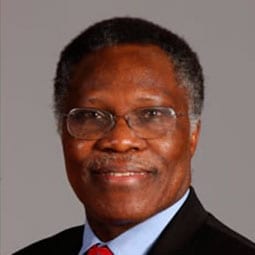
Rev. Samuel Kobia, Ph.D.
Reverend Dr. Samuel Kobia is a Chairman, National Cohesion and Integration Commission in the Executive Office of the President. He is the first African to be elected General Secretary of the World Council of Churches (a worldwide fellowship representing more than 590 million Christians). He was appointed the All Africa Conference of Churches Ecumenical Special Envoy in 2010.
He is a Professor (honorary) of University of Buenos Aires (Argentina’s oldest university). He holds aDoctor of Divinity (honorary) from Christian Theological Seminary, Indianapolis, 1993 (USA), and Doctor of Philosophy in Religious Studies from Fairfax University, Louisiana, 2003 (USA). He holds a Master of Artsin City Planning from Massachusetts Institute of Technology (USA), a diploma in Urban Ministry from McCormick Theological Seminary (USA), anda Bachelor of Arts in Theology from St. Paul’s United Theological College (Kenya).
Among his many social, political and ecumenical involvements, in 1992,Dr. Kobia chaired Kenya’s National Election Monitoring Unit, chaired peace talks for Sudan in 1991, helped found the Nairobi Peace Group (1987) and the Fellowship of Councils of Churches in Eastern and Southern Africa (FOCCESA), was vice-moderator of the Commission of the WCC Programme to Combat Racism (1984-91), chaired the Frontier Internship in Mission (FIM) International Coordination Committee (1981-85), and helped reorganize the Zimbabwe Christian Council after independence (1980-81). Between 1987 and 1993, he served as the General Secretary of National Council of Churches of Kenya (NCCK). In recognition of his position within the ecumenical family in Kenya and beyond, Dr. Kobia was awarded the country’s National Ecumenical Award and appointed chancellor of St. Paul’s University, Limuru, Kenya, in 2007.
Dr. Kobia has written numerous papers and articles on Africa, Peace and Ecumenism. His publications reflect his vision and working experience. He is the author of Dialogue Matters: The Role of Ecumenical Diplomacy in the Run-up to the Independence of South Sudan (2013),and South Sudan: Free at Last (2011).

Mumo Nzau, Ph.D.
Dr. Mumo Nzau is a Lecturer at the Institute of Diplomacy and International Studies at the University of Nairobi (Kenya).He is a Fulbright Scholar who holds a Doctor of Philosophyand Master of Arts in Political Science, bothfrom the State University of New York at Buffalo (USA). He also holds aMaster of Artsin International Relations from United States International University – Africa (Kenya), in addition to other graduate-level training in the field of peace and conflict studies from Masinde Muliro University of Science and Technology (Kenya).
He has been a Senior Lecturer of Political Science at the Catholic University of Eastern Africa (CUEA) and Adjunct Faculty at the United States International University –Africa (Kenya); as well as the Department of Political Science and Public Administration, University of Nairobi (Kenya).
Dr. Nzau has is a key resource person in the Foreign Affairs, Internal Security, and Defense dockets in Kenya. His consultancy and research specialties include national security and defense strategy, conflict resolution and management, governance and developmenton which he has numerous peer-reviewed published works in the forms of books, book chapters and journal articles.
He is the author of Transitional Justice and After: Kenya’s Experience with IDP Resettlement and Peacebuilding since the 2007/08 Post-Elections Violence(2016).

Titus Ibui, E.G.H.
Titus Ibui is the Founder and Executive Director of Bell Industries Limited. He holds a Master of Business Administration degree, anda Bachelor of Science in Agriculture. He has extensive training in sales and training, advanced marketing and management, crop protection, planning and marketing, and finance.
He has worked as a Product Marketing Manager, Technical Manager, and Technical Sales Representative at Shell International Chemical Group. He has also worked for the Ministry of Agriculture as District Land and Farm Management Officer where he trained extension officers on land management and advised the District Land Board on suitability and viability of land subdivision.
He was a Member of Board of Directors of East African Portland Cement Company in Athi River (Kenya); Member of Management Board of the Methodist Guest House Ltd.; Member of Board of Trustee, Kenya Methodist University (KEMU);Director of Blue Waters Resort, Diani;Chairman of the Kenya Leather Development Council Board; and Council Member, China Africa Friendship Association – Kenya chapter.
He is a member of three professional associations: British Institute of Management (MBIM), Kenya Institute of Management (MKIM), and Marketing Society of Kenya (MMSK).

Ambassador Yusuf Abdulrahman Nzibo, Ph.D., E.B.S., O.G.W.
Ambassador Yusuf Abdulrahman Nzibo is the former National Chairman of the Supreme Council of Kenya Muslims (SUPKEM)– an umbrella body that represents the interests and aspirations of the Muslim community in Kenya. He holds a Doctor of Philosophy in Latin American Studies and a Master of Philosophy, both from the University Glasgow (Scotland);a Master of Business Administration from Strayer College (United States); and a Bachelor of Arts (Honours) in History and Politics from the University of Nairobi (Kenya).
He served as a Commissioner of both the Interim Independent Electoral Commission (2009-2011) and the Independent Electoral and Boundaries Commission, Kenya (November 2011 to January 2017). He was a Lecturer at the University of Nairobi for 10 years where he taught Latin American, Kenyan, and the History of Political Ideas. He has published several articles in local and international journals. He has specialized in the history of the spread of Islam into the interior of Kenya during the colonial period.
In 2006, he spearheaded the setting up of the first Islamic bank in Kenya (Gulf African Bank Limited) borrowing heavily on the knowledge he acquired from visiting several Islamic banks in both Dubai and Bahrain and the Meezan Bank of Pakistan. Prior to this, he served as the Commissioner General of the Kenya Revenue Authority (1996 – 1998); Kenya’s Ambassador to the Netherlands covering Slovak and the Czech Republics (1998-2000); a non-resident Ambassador to Mexico and the Republic of Colombia (2000 – 2004); and to the Kingdom of Saudi Arabia and Kuwait (2004 – 2006).
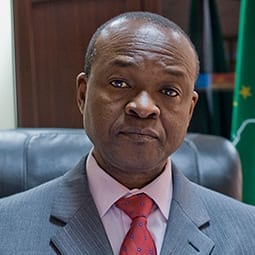
H.E. Erastus Mwencha, E.G.H., M.B.S.
Ambassador Erastus Mwencha is the immediate former Vice Chairperson of the African Union Commission (AUC). He was elected to this position in January 2008 by the Heads of State and Government of the 54 Member States of the African Union, and re-elected to the same position in July 2012. Prior to his election at the AUC, he worked at Common Market for Eastern and Southern Africa (COMESA) for over 25 years, and served as its Secretary General for 10 years.
Amb. Mwencha contributed to the transformation of the regional body into a viable economic integration entity, with the largest free trade area (FTA) in Africa. He was particularly instrumental in contributing to the expansion of intra-COMESA trade, developing programs for private sector cooperation and trade with the rest of world, spearheading regional hard and soft infrastructure programs in transport, communication, and energy. He also developed the continental negotiating position for the Doha Round of Negotiations of the World Trade Organization, Economic Partnership Agreements (EPAs), African Growth and Opportunity Act (AGOA) and actively supported the programs to integrate women in development.
Amb. Mwencha has also held several senior roles within the Ministry of Industry in Kenya.